Music

Folk Pioneer Ellen Stekert’s 1956 album “Ballads of Careless Love” to receive first digital release following AI restoration

MINNEAPOLIS, Minn. — April 8, 2026 — Seven decades after its original pressing, folklorist and musician Ellen Stekert’s 1956 album Ballads of Careless Love is set to make its digital debut. The meticulously restored album will be available on all major streaming platforms on April 17.

The album’s launch follows the release of two preview singles: “The Little Sparrow,” which debuted on April 3, and the title track, “Careless Love,” on April 10. Both songs are currently available on Ellen’s Spotify page, and can be heard via the embedded links below.

Restored by producer Ross Wylde, the re-release brings a vital piece of the American Folksong Revival into the modern era. Prior to meeting Stekert, Wylde had heard her music through a YouTube upload of her track “Dink’s Song.” Wanting to hear more, he realized the album was entirely out of print and only accessible via original vinyl records.

When Wylde and Stekert eventually connected and began collaborating, restoring the 1956 record became a priority. After a fruitless search for the original master tapes, Wylde sourced a clean vinyl copy to serve as the foundation for an AI-assisted remaster.

“Removing the crackle proved difficult, even with AI, but I think it adds a very unique and authentic sound to the songs,” Wylde explains. “It reminds me how great media can so easily be lost to time, if not for archiving, collaboration, and technology.”

A “Stranger in a Strange Land”

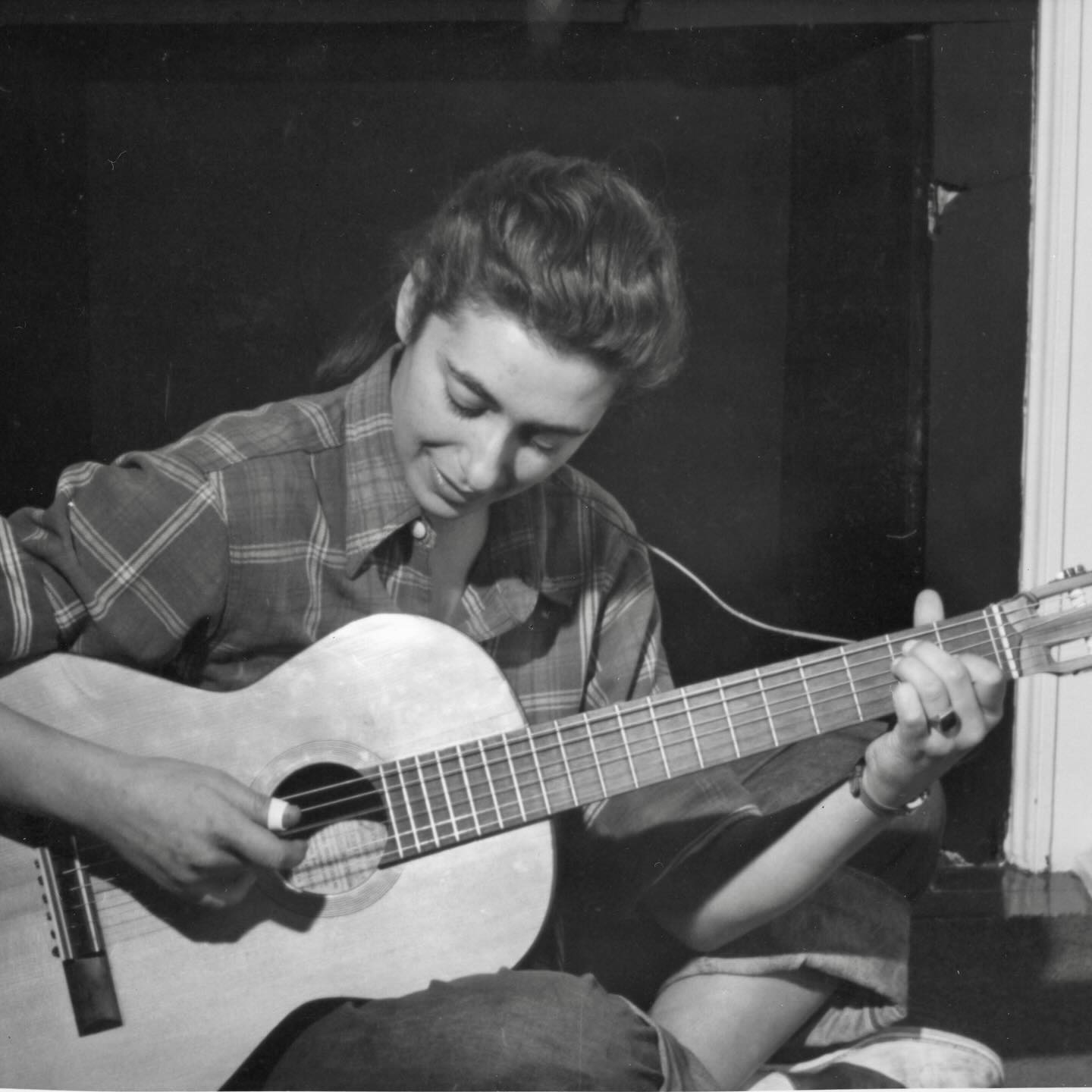
The bulk of Ballads of Careless Love is deeply tied to Stekert’s formative years at Cornell University. Entering the school in 1953, she describes herself as a “savage from the Folksong Revival” navigating a hyper-civilized, rigid 1950s academic world of dress codes, curfews, and segregated dormitories.

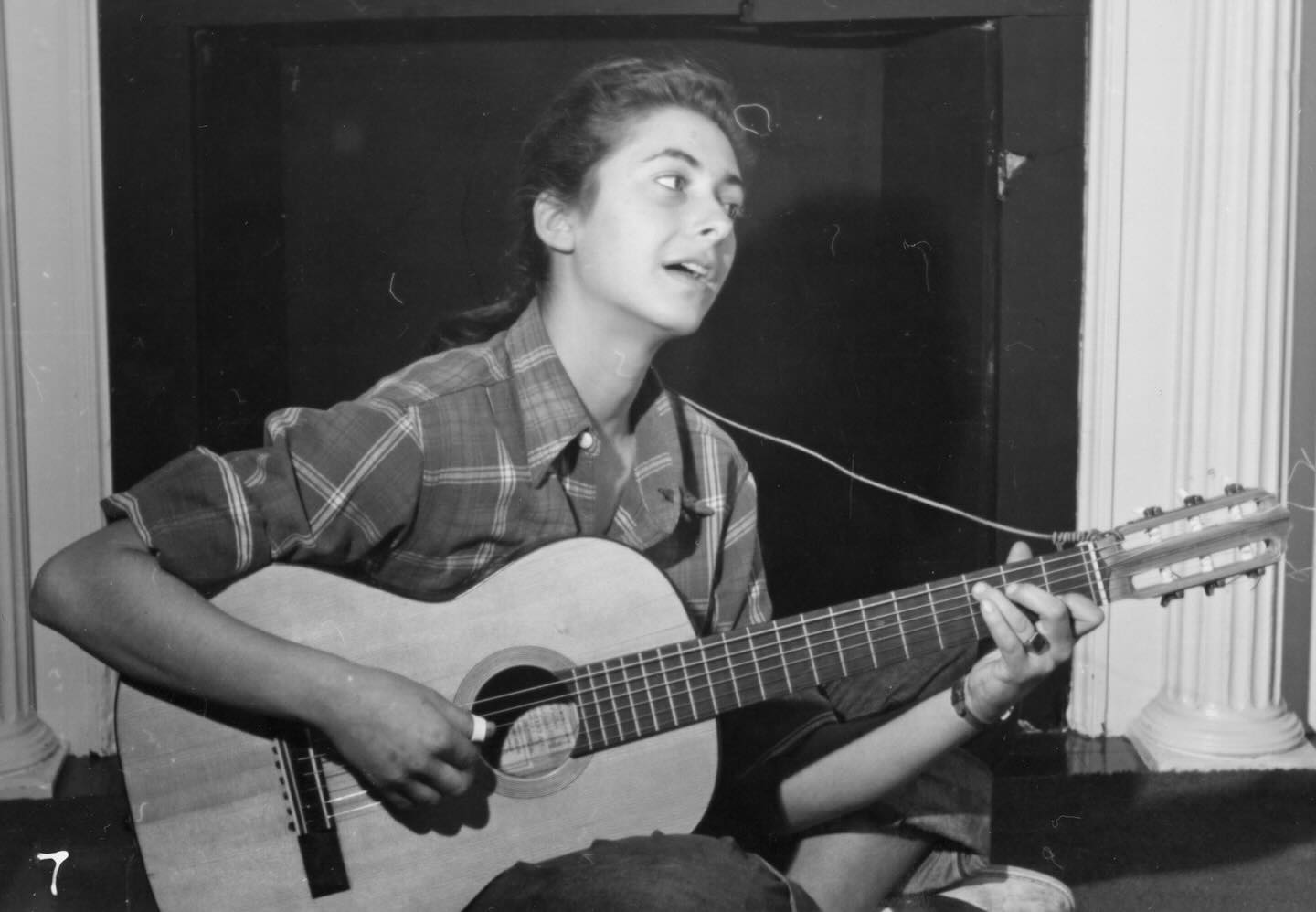
Armed with a guitar and an unwavering passion for traditional music, Stekert found her footing by seeking out Professor Harold Thompson, a respected folklorist. Her enthusiasm landed her a job as his undergraduate “graduate” assistant, a role that sparked her life’s work in folklore and sent her across New York State to collect songs from traditional singers such as Fuzzy Barhight, an ex-lumberjack.

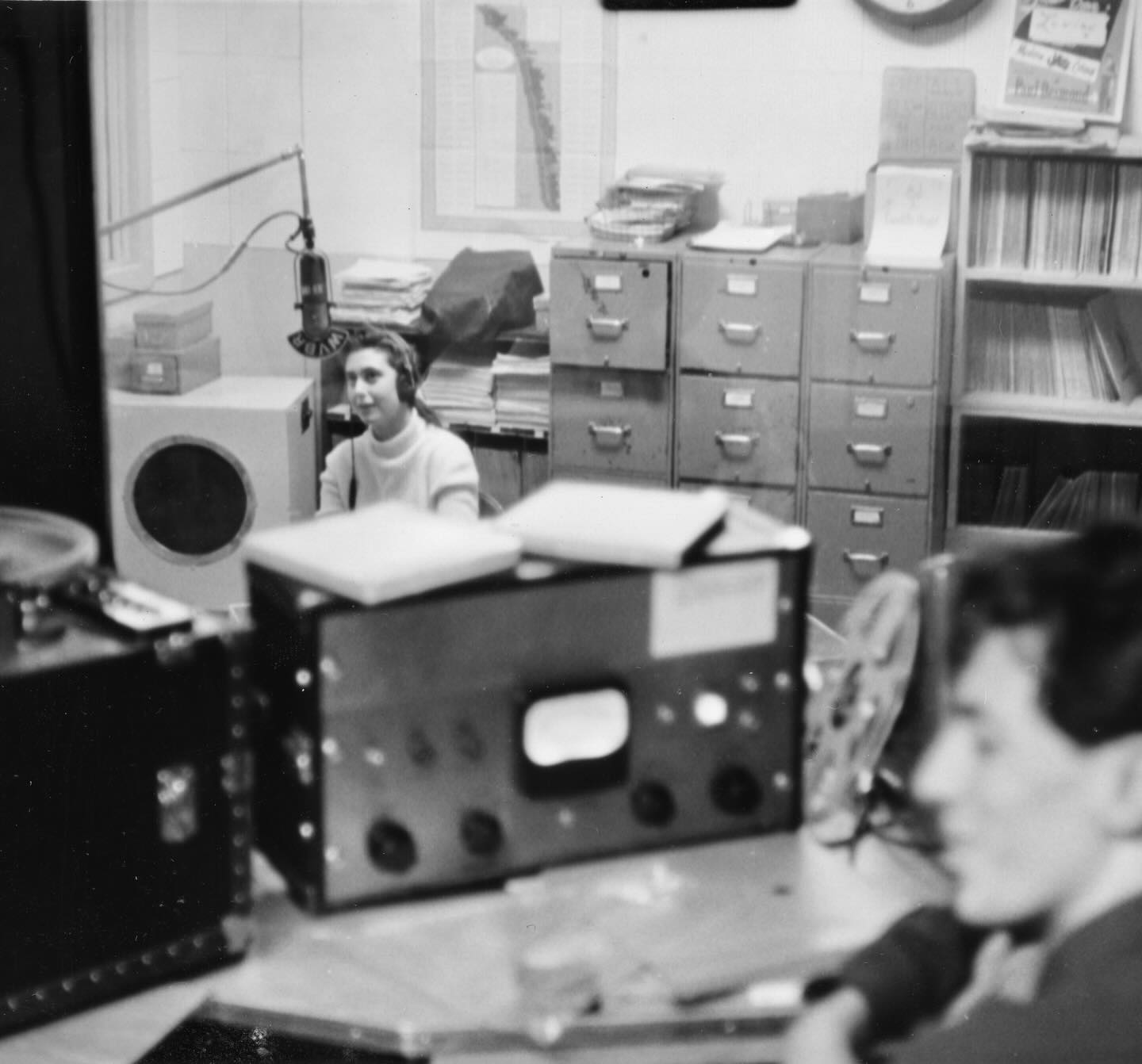
During her sophomore year, Stekert launched a folk music program on the university radio station, WVBR. Her success on the airwaves led to an invitation from the Cornell Recording Society to cut a record.

The Original Recording

Recorded in the radio station studio with friends watching through the control room glass, the album captures the raw, authentic energy of the era’s folk movement. The record’s iconic cover photography was shot by Stekert’s classmate, Howard Mitchell, capturing the spirit of a growing community of student and faculty folksingers.

This community frequently gathered for Sunday evening group sings led by Stekert. In the midst of the McCarthy-era “Red Scares,” these peaceful gatherings occasionally drew the suspicion of authorities. Stekert recalls an evening when large men in trench coats burst into the room to warn the singers to “behave” themselves.

“Our greatest ‘subversive act’ was singing songs that were part of our heritage and which protested things that were not,” Stekert reflects. “We were out there in plain view, doing nothing wrong, living our lives and singing our songs.”

An “Ersatz Diploma” Restored

While Stekert went on to have a long, successful career as an academic and folklorist, Ballads of Careless Love remained a deeply personal milestone.

“I regarded it as something akin to the diploma I received for surviving four years at the university,” Stekert says. “My LP, my ‘ersatz’ diploma that I took great pride in, never hit the ‘charts’ or received much attention. But I was busy with graduate school, not minding its relative obscurity.”

Now, thanks to modern technology, Stekert’s “diploma” is fresh off the turntable and ready for a new generation of listeners.

Folk legend Ellen Stekert unveils rare recordings in new album “Go Around Songs, Vol. 2”, including lost Woody Guthrie song and other unpublished compositions from the folk revival

Ellen Stekert and her team are proud to announce the release of Go Around Songs, Vol. 2, the second installment in an ambitious archival project documenting the career of the legendary folksinger and folklorist. Now 90 years old, Stekert was a foundational pillar of the 1950s Greenwich Village scene, and this new collection features a treasure trove of previously unreleased live and home recordings spanning four decades.

From Greenwich Village to the Digital Age

Stekert’s influence on the 1960s folk revival cannot be overstated. In his autobiography Chronicles: Volume One, Bob Dylan wrote that she was one of the musicians from whom he learned his own style and songbook by watching her perform in concert.

The album blends intimate home sessions with concert recordings from the 1950s through the 1980s. To bring these tapes to life, producer Ross Wylde, a 26-year-old musician from California, utilized modern AI technology to remix mono recordings, separating vocals from guitar to achieve a clarity previously impossible for archival “bootlegs”.

“There is a kind of magic to home recordings—the hiss of the tape, the ambient sound of the room, the softness of the vocals,” says producer Ross Wylde. “Intimate home recordings like these are the closest you can get to an artist’s true form, which is why it was such a privilege to work on them.”

Discoveries of “Lost” Folk History

One of the centerpieces of the album is a historical revelation: “High Floods & Low Waters,” a “lost” and unpublished song by Woody Guthrie. The track captures a 1959 television performance where Stekert appeared alongside folk icons Jean Ritchie and John Cohen of the New Lost City Ramblers.

Beyond the Guthrie discovery, the album serves as a gallery of folk rarities. It includes the haunting “I’ll Give You Any Mountain,” written in the 1960s by Stekert’s friend Tracy Powers, and the “Associate Professor’s Lament,” a biting parody penned by an anonymous professor in the mid-1960s that also reflects Stekert’s own dual life as both a performer and a dedicated academic.

The Journey Continues

Ellen Stekert currently resides in Minneapolis with her partner, Beth. The collaboration between Stekert and Wylde—which began after a chance meeting online—shows no signs of slowing down. Their next project is the remastering and re-release of Stekert’s 1956 album Ballads of Careless Love, which has been unavailable to the public for decades.

To read an essay that Ellen wrote on this new release, visit her Bandcamp page here.

Go Around Songs, Vol. 2 is available now on all major streaming platforms and Bandcamp.

Ellen releases new single “Golden Apples Of The Sun,” honoring a folk legacy and friendship with Dave Van Ronk

New track previews forthcoming album Go Around Songs Vol. 2, a collection of home and live recordings from the 1950s–1970s

Folklorist and singer Ellen Stekert has released her newest single, “Golden Apples Of The Sun,” a deeply personal and historically resonant recording that looks ahead to her upcoming album, Go Around Songs Vol. 2. The album gathers home and live recordings made between the 1950s and 1970s, capturing a lifetime immersed in traditional song and the folk revival.

“Golden Apples of the Sun” sets W.B. Yeats’s poem “Song of the Wandering Aengus” to a melody Ellen has carried with her for decades. “The beauty of this Yeats poem is perfectly matched by its musical setting,” she says. Yet for many years, the origins of that setting had slipped from memory.

“I had long forgotten where I learned the music to which the poem is set,” Ellen recalls, even as she remembered “Judy Collins’ stunning rendering of it on one of her early recordings.” The answer resurfaced unexpectedly during a visit in 1966, when her friend and fellow folk singer Dave Van Ronk stopped by while passing through Detroit. Ellen had been friends with Van Ronk since meeting him at Izzy Young’s bookstore in the mid-1950s—where the folk revival movement began to blossom. “His visit was filled with music,” Ellen says. “And among the songs he played was Golden Apples,’ using his setting. I realized then that it was his setting I had learned.”

The single carries particular historical value because it preserves Van Ronk’s distinctive setting of the song—one that Ellen absorbed so fully it became inseparable from her own singing. “When you sing a song that you love, you absorb it and it becomes impossible to think that there ever was a time when you did not know it,” she reflects. “That was true for me of ‘The Golden Apples.’”

In words that echo Yeats himself, Ellen describes the way songs become part of the singer: “I wondered at how we make songs our own; how they become a part of us… or, as Yeats said, ‘you cannot tell the dancer from the dance’—or, I thought, the singer from the song.”

A rare recording of Dave Van Ronk teaching Ellen his setting of “Golden Apples of the Sun” in 1966 is available here. This recording offers listeners a glimpse into the oral tradition at work.

“Golden Apples Of The Sun” is available now on all major streaming platforms and can be purchased on Ellen’s Bandcamp page. Go Around Songs Vol. 2 will follow, continuing Ellen’s lifelong work of preserving, inhabiting, and passing on the songs that shaped her.

Ellen releases new single, “Puttin’ On The Style”

Ellen has released another new single, “Puttin’ On The Style,” revisiting a recording of the song that she made in the early 1960s. A different version of this song can also be found on her now-rare debut record, 1955’s Ozark Mountain Folk Songs, Volume One.

About the song

Ellen writes:

"Folksongs, even those as light-hearted as “Puttin' On The Style,” are not what some believe; they’re not simply rhymes with tunes for undeveloped minds. They are glimpses into the values and feelings of the people who perpetuate them. They are windows into other worlds — or mirrors with which to see ourselves. When a song ceases to mean anything, it fades away and disappears. When a song is malleable, it changes. Folksongs live and change, and in those changes are the histories of the peoples who have chosen to perpetuate them, change them, or let them die.

In 1953, I left home for my Freshman year at college in upstate New York. I had recorded my first album with Stinson Records earlier that year and among the songs on it was “Puttin' on the Style.” Having been raised in a privileged suburb of New York City, I thought I knew a great deal about the subject. I had a good deal to learn.

I left home for college believing that the woman I saw about a year ago shopping in our local A&P in a mink coat, was putting on the style. But I didn’t think that my wearing dungarees into the city to visit my grandmother was anything more than my rejecting the “dressed up” values of my mother’s family. The dress my mother preferred I would wear was putting on the style in my eyes, but I never thought of my wearing dungarees that way.

In my view, I simply didn’t want to be forced into what my mother thought was proper clothing for a young lady. I didn’t like dresses, girdles or heels and I chose to play down my femininity. In doing so, I sorely broke with propriety. That rebellion was a reverse “putting on the style.” It was meant as a negative statement to my family rather than an attempt to be accepted….although it well might have been a plea to be accepted. Whichever it was, it clearly broke group normative behavior.

“Putting on the Style” speaks of minor “outrages” of people attempting to be accepted within the society of both the narrator and what s/he sees. It doesn’t tell us about aberrant behavior at the level of a murdered-girl ballad, but it does tell us something of the limits of various kinds of behavior at the times and places it was sung.

I have not yet come across a song about wearing dungarees in an inappropriate place, but perhaps someone will write it. I wonder if it will live and change or just fade away?"

With “Puttin’ On The Style,” Ellen invites listeners to hear the song as both artifact and mirror: a relic of another era and a commentary on how we still negotiate identity, class, gender, and belonging in the way we dress and behave.

“Puttin’ On The Style” is available now on all major streaming platforms and Bandcamp.

Credits

Released November 14, 2025
Guitar, Vocals: Ellen Stekert
Producer: Ross Wylde
Production Assistant: Bates Detwiler
Editorial & Publicity Manager: Christopher Bahn

Ellen Stekert releases haunting new single, “The Ballad Of Frankie Silver”

Renowned folklorist and singer Ellen Stekert has released her latest single, “The Ballad Of Frankie Silver,” a riveting contribution to the rich lineage of American murder ballads and traditional storytelling.

Stekert first encountered the song in the 1952 book The Frank C. Brown Collection of North Carolina Folklore (here’s a link to it at the Internet Archive), where she also believes she learned the striking melody. “I fell in love with the tune’s gliding grace,” she recalls. “So much so that despite the grisly subject matter, I learned the song.”

“The Ballad of Frankie Silver” occupies a fascinating niche in folk tradition. It belongs to the “Good Night” genre—farewell confession songs typically sung from the perspective of the condemned murderer. In most cases, these ballads center on men who have killed their sweethearts, often echoing themes shared by so-called “Jealous Lover” songs. But Frankie Silver stands apart.

“It is the only Good Night about a female protagonist that I know of,” Stekert notes. “In addition, the murder description is among the most detailed and chilling I’ve heard.”

Despite scholarly curiosity, the song—like so many enduring folk narratives—refuses to answer its most haunting questions. Why did Frankie commit the crime that condemned her at only eighteen years old? Was she acting in self-defense, jealousy, or under circumstances lost to time?

“This is the hallmark of folk songs,” Stekert explains. “They draw in the listener to fill out the story. We never know why Lord Randall was poisoned by his sweetheart or why Sir Patrick Spens had to sail to his death. If any story begged for an answer, this one does.”

With her commanding voice, deep historical knowledge, and lifelong dedication to traditional music, Ellen Stekert brings the mystery of Frankie Silver vividly into the present—inviting listeners to lean closer, listen deeper, and decide for themselves.

“The Ballad Of Frankie Silver” is available now on all major streaming platforms including Bandcamp.

Ellen releases long-lost single “I’ll Give You Any Mountain,” written by friend Tracy Powers in the early 1960s

Folk singer and folklorist Ellen Stekert has released a new single, I’ll Give You Any Mountain,” a song with roots deep in the early 1960s folk revival. Written by her friend Tracy Powers more than six decades ago but never previously released, the piece is finally being shared with the world.

“I’ve chosen to sing this song for you because of its captivating melody,” says Stekert. “In places, the words soar with the music, while in others, they are a sentimental mix of ‘If I Were a Carpenter…’ and the ancient drama of Icarus. I find it an unforgettable piece. It moves me well beyond sentimentality or drama.”

Stekert and Powers first met as graduate students at the University of Pennsylvania in Philadelphia during the early 1960s—a time when the concept of the singer-songwriter was just beginning to emerge as a cultural force. Bob Dylan arrived in New York City in 1961, and soon became the archetype of the role, while Connie Converse, a visionary but tragically overlooked songwriter, left New York the same year, disappearing into mystery.

Though Powers had the talent to stand among them, her path led elsewhere. “I always thought that Tracy, who was a very good singer and player, could have become a successful writer of songs or a good singer-songwriter herself,” Stekert reflects. “But Tracy went on to get her degree and be a teacher. And the world lost a fine composer and musician. And with time, I lost track of Tracy.”

What remains are the recordings Powers left with Stekert during visits to Detroit, where Stekert began her own teaching career. “I treasure those tapes,” Stekert says. “On them, she patiently gives me the chords she used in composing her songs.”

Producer Ross Wylde shares: “Listening to the masterful songs of Tracy Powers, I’m reminded of how many brilliant artists remain unknown, either because their art was never shown or because they were overlooked. I think there are many female songwriters of the 1960s who remain shrouded by the residual effects of sexism. I’m glad the recordings of Ellen and Tracy exist, but it makes me sad to think about all of the songs that were never put to tape.” With this release, Ellen Stekert brings I’ll Give You Any Mountain into the light. It is available now on all major streaming platforms including Bandcamp.

Ellen’s photography of the 1964 Newport Folk Festival out now!

Hi folks,

Ellen’s personal archives include hundreds of photographs of interest to fans of folk music and folklore. We are just starting to digitize, clean up, and organize this treasure trove of images, which includes material from Ellen’s folksong collecting trips, her childhood in 1940s and 1950s New York, and Ellen’s concerts and other public appearances. We will be posting many of these here on ellenstekert.com, and plan to offer some of the best of these for sale as prints and posters in the near future. (More details on that very soon!) 

We thought we’d start with images taken at the historic Newport Folk Festival in 1964. Most of these have never been publicly released before now. These photos include intimate and informal behind-the-scenes images of Bob Dylan, Pete Seeger, Peter Yarrow, Malvina Reynolds, Mississippi John Hurt, Doc Watson, and many more. Check it out on the Photography page!

Ellen releases new single, “Shugo”: A rare folk treasure unearthed from the lumbercamps of upstate New York

Folksinger, folklorist, and cultural historian Ellen Stekert has released her latest single, “Shugo”—a playful, rarely-heard piece of Americana with roots in vaudeville, circus songsters, and the lumbercamps of upstate New York.

“This is a nonsense song first sung to me by an old lumberjack in the 1950s named Ezra ‘Fuzzy’ Barhight,” writes Stekert. “It probably has vaudeville or music hall origins. He learned it from a song pamphlet sold at a traveling circus. Since he was a bit of a trickster, he liked the song a lot.”

Ellen worked very closely with Fuzzy during her days as a folksong collector—he was one of the two singers she wrote about for her Ph.D. thesis, and her 1958 Smithsonian Folkways album Songs of a New York Lumberjack was made up entirely of songs she learned from him. Fuzzy first played “Shugo” for Ellen when they first met in March 1956, but Ellen’s version of the song, heard above, wasn’t done for the Smithsonian sessions but was recorded about 10 years later.

The song itself describes “a man a bit strange,” delivered with humor and good-natured absurdity. Like many printed folk songs of its time, the words were set to the tune of another well-known melody, borrowing a chorus of nearly impossible-to-sing nonsense syllables. The result is a joyful chaos reminiscent of “Shule Aroo” and other playful traditions in folk music.

Stekert recalls how the song’s spirited nonsense always became a highlight of her concerts:

“In the spirit of the song as humorous nonsense, I often encouraged a concert audience to sing along on it—a request that usually brought on a good deal of laughter.”

With “Shugo,” Stekert once again bridges the gap between history and performance, reviving a song that traveled from circus pamphlets to lumbercamps, and now into the hands of a new generation of listeners.

“Shugo” is available now on all major streaming platforms and Bandcamp.

Credits

Released August 22, 2025
Guitar, Vocals: Ellen Stekert
Informant: Ezra “Fuzzy” Barhight
Producer: Ross Wylde
Production Assistant: Bates Detwiler
Editorial & Publicity Manager: Christopher Bahn

New release: Ellen sings Malvina Reynolds’ “On the Rim of the World”

We’re happy to announce a newly remastered single from Ellen’s personal archives: “On the Rim of the World,” a powerful and poignant song by legendary songwriter Malvina Reynolds.

The recording, originally performed by Ellen at her home in 1980, was never intended for commercial release—distributed only among a small circle of friends. Decades later, the track has been carefully brought to new life by California singer-songwriter Ross Wylde, who used AI technology to enhance the original tape. The result is a haunting and intimate version of Reynolds’ song that feels as immediate and urgent as when it was first sung.

The single’s cover features a photo taken by Ellen herself—capturing Reynolds deep in thought and mid-song on a ferry from Vancouver to Hornby Island in 1973. The two were close during Stekert’s time as a Visiting Professor at UC Berkeley in the early ’70s, often traveling and performing together.

“On the Rim of the World” is a striking commentary on homelessness, loss, and the vulnerability of life on the margins. Written by Reynolds after the death of her husband, Bud, it is—like much of her work—both deeply personal and broadly political.

“As with most of Malvina’s songs, the song is not primarily a statement about her situation,” Stekert explains. “It is about a woman, a girl, a child without means, about homelessness and bare despair. This song is as pertinent today as when she wrote it in the 1970s.”

“On The Rim of the World” is now available on major streaming platforms and Bandcamp. This intimate recording, half a century in the making, is not just a tribute to Malvina Reynolds—it is a testament to the endurance of folk music as an art form that speaks across generations.

About the song

Below, Ellen tells the story of her friendship with Malvina Reynolds and her version of “On the Rim of the World”:

Credits

Recorded in 1980. Photograph of Malvina Reynolds taken by Ellen Stekert in 1973 en route to Hornby Island, British Columbia.
Released July 18, 2025
Guitar, Vocals: Ellen Stekert
Composer: Malvina Reynolds
Producer: Ross Wylde
Production Assistant: Bates Detwiler
Editorial & Publicity Manager: Christopher Bahn

Talking with Paul Metsa on Wall of Power Radio Hour

Ellen and I had a great conversation with musician and author Paul Metsa on Thursday for his radio shows in Duluth and the Twin Cities, talking about Ellen’s music and her life in the world of folksingers and folklorists, and particularly her meetings with Woody Guthrie, Reverend Gary Davis, and Alan Lomax.

Ellen’s interview will broadcast on Duluth’s Stars Over the Prairie show 10 a.m. to noon at 610AM-103.9FM or worldwide on streaming at www.kdal610.com. Then she’ll be on Paul’s Wall of Power Radio Hour in the Twin Cities on AM 950 KNTF today at 6 p.m. and Sunday at 4 p.m.

The streaming audio of the interview can be heard at AM 950’s Wall of Power website, or for your greatest convenience, just play the file below:

Please have a listen and let us know what you think in the comments. We’d love to come back sometime—the time passed very quickly and there are so many more stories to tell.