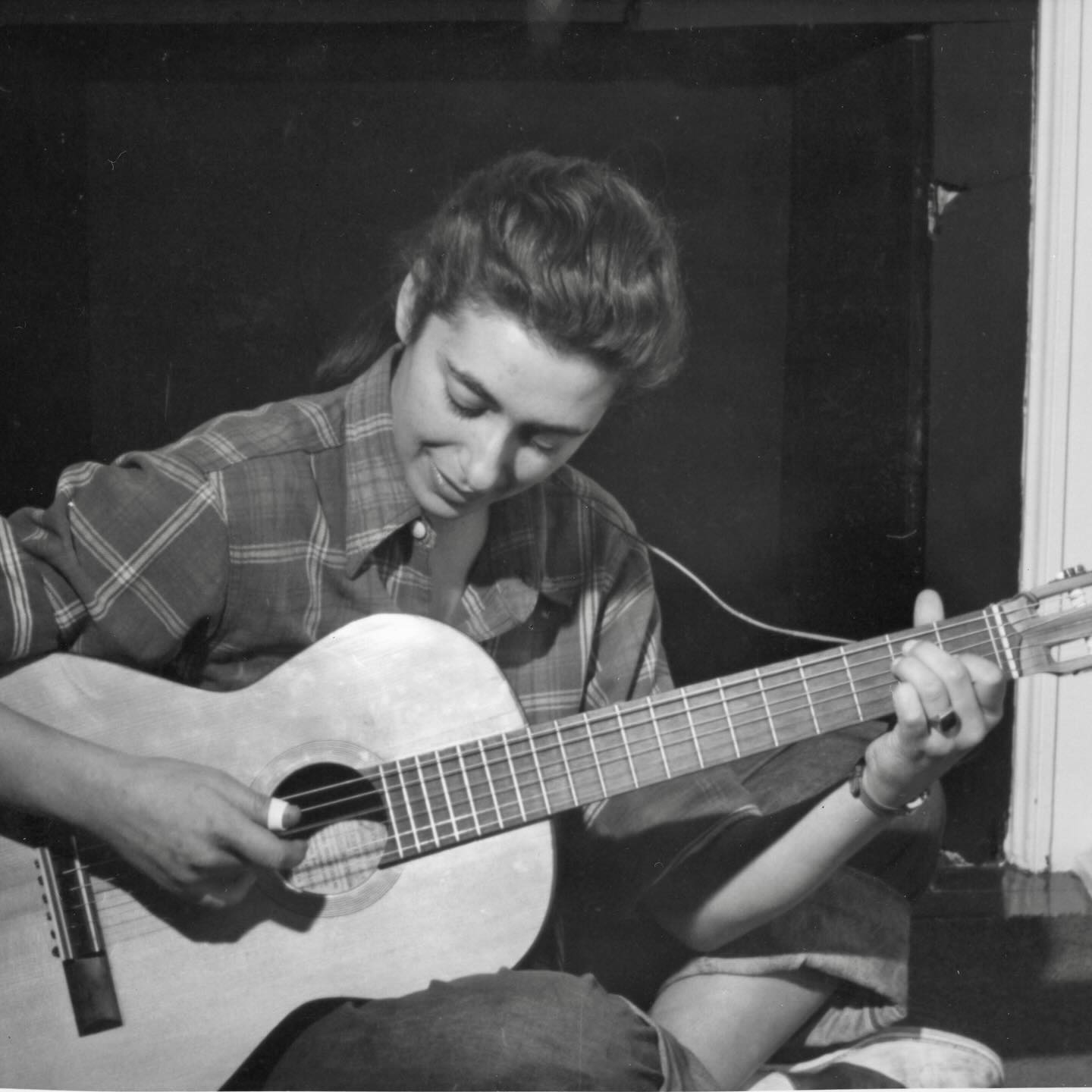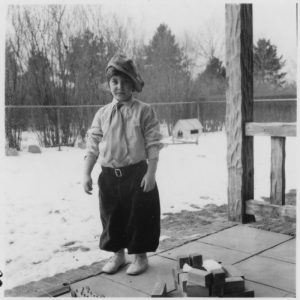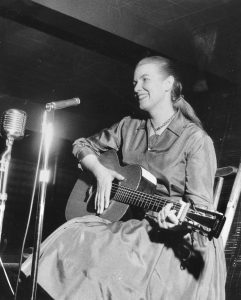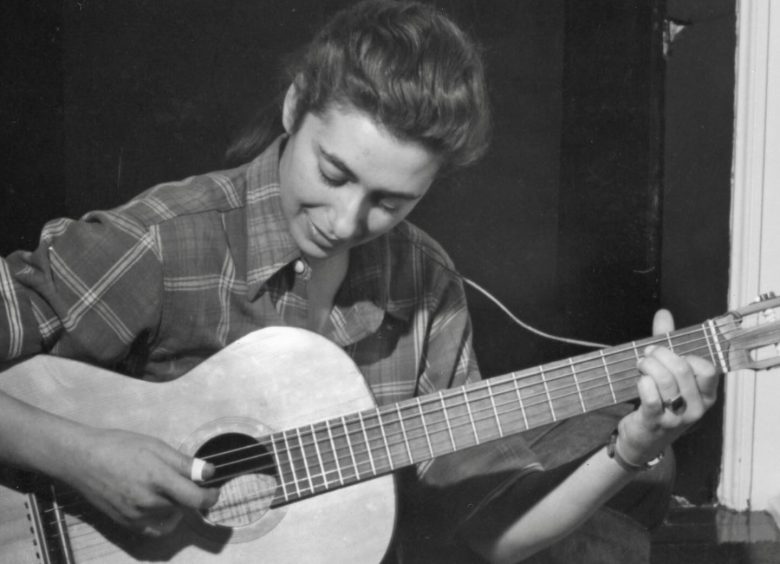
For the first time in 70 years, Ellen’s legendary folk album Ballads of Careless Love can be heard digitally. Before this, the only way you could listen to these amazing tracks was to find an original copy of the 10” vinyl record. Please consider purchasing the album on Bandcamp to support Ellen! Below, Ellen offers her thoughts on the making of this historic album, and her days as part of the folk-music movement at Cornell University in the 1950s.
Ellen writes:
When I entered Cornell as a freshman in 1953, I had only an inkling I was entering a foreign land. But as the first weeks passed, the inkling became an undeniable certainty: There were all too many rules and mysteries for me to decipher along with my class subjects. I found myself in a hyper-civilized world that was determined to make me into a hyper-civilized alumni in four years.

As a “savage” from the Folksong Revival, I still didn’t know who Bach was; I didn’t understand why we had to stand up when the Head Resident of our Dormitory entered the dining hall, or why we had a dress code for dinner. I’d never fancied “gracious living,” the lifestyle we were supposedly practicing, and I resented having a curfew. It. was the 1950s, a time when dorms were segregated, panty raids were common, and women students were locked up every night and let out early in the morning for classes.

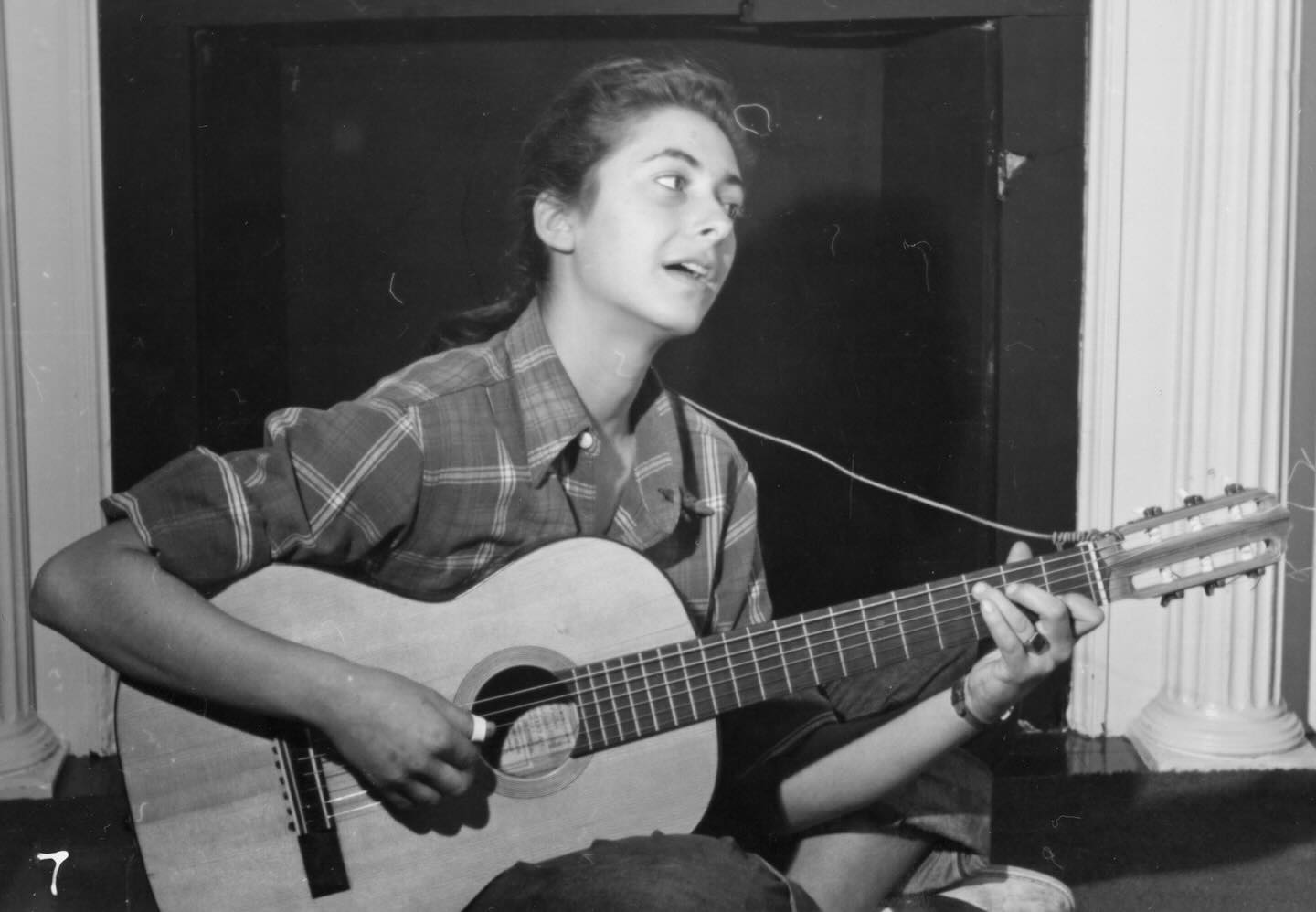
I was “a stranger in a strange land”—but I had my guitar, and I had cut my first album almost a year prior to setting foot in the hills above Cayuga’s waters. (This was Ozark Mountain Folk Songs, released in 1955 on Stinson Records, the Greenwich Village folk label which is now part of Smithsonian Folkways.)

When classes began, I sought out the professor who taught folksong, Professor Harold Thompson, a respected folklorist and specialist in Scottish Literature. His former assistant had left Cornell the previous year with a PhD in hand. To my surprise, with only the credentials of my freshman enthusiasm and having already made an LP of folksongs, I was offered the job of being Harold Thompson’s “graduate” assistant beginning my sophomore year. I readily accepted.

 Professor Thompson had recently suffered a stroke, so it was my task not only to personally illustrate the ballads and songs he was discussing but also to serve as a sort of disc jockey and Girl Friday for the course. Little did I know when I took the position that it would also be the beginning of my life’s work in folklore.

Had Dr. Thompson not been sidelined by his health, I never would have been sent halfway across New York State to meet and collected songs from a gruff ex-lumberjack. That assignment taught me more about the value of traditional art and knowledge than any class I took in college. As “Fuzzy,” that ex-lumberjack, said to me, emphatically and with mock incredulity when I asked about the mention of a “peavey” in one of his songs: “You don’t know what a peavey is?! (Loud, short laugh)…and you up to college?! Well, when you’re through up there come down here and stay a while and you’ll commence to know something!” (To spare you the trip to the dictionary: A peavey is a logging tool consisting of a wooden pole with a metal spike or hook on the end.)

And so, through a series of coincidences I never could have planned, I found myself the fortunate victim of accidental events: I was an undergraduate “graduate” assistant in the folksong classes of professor Harold Thompson.

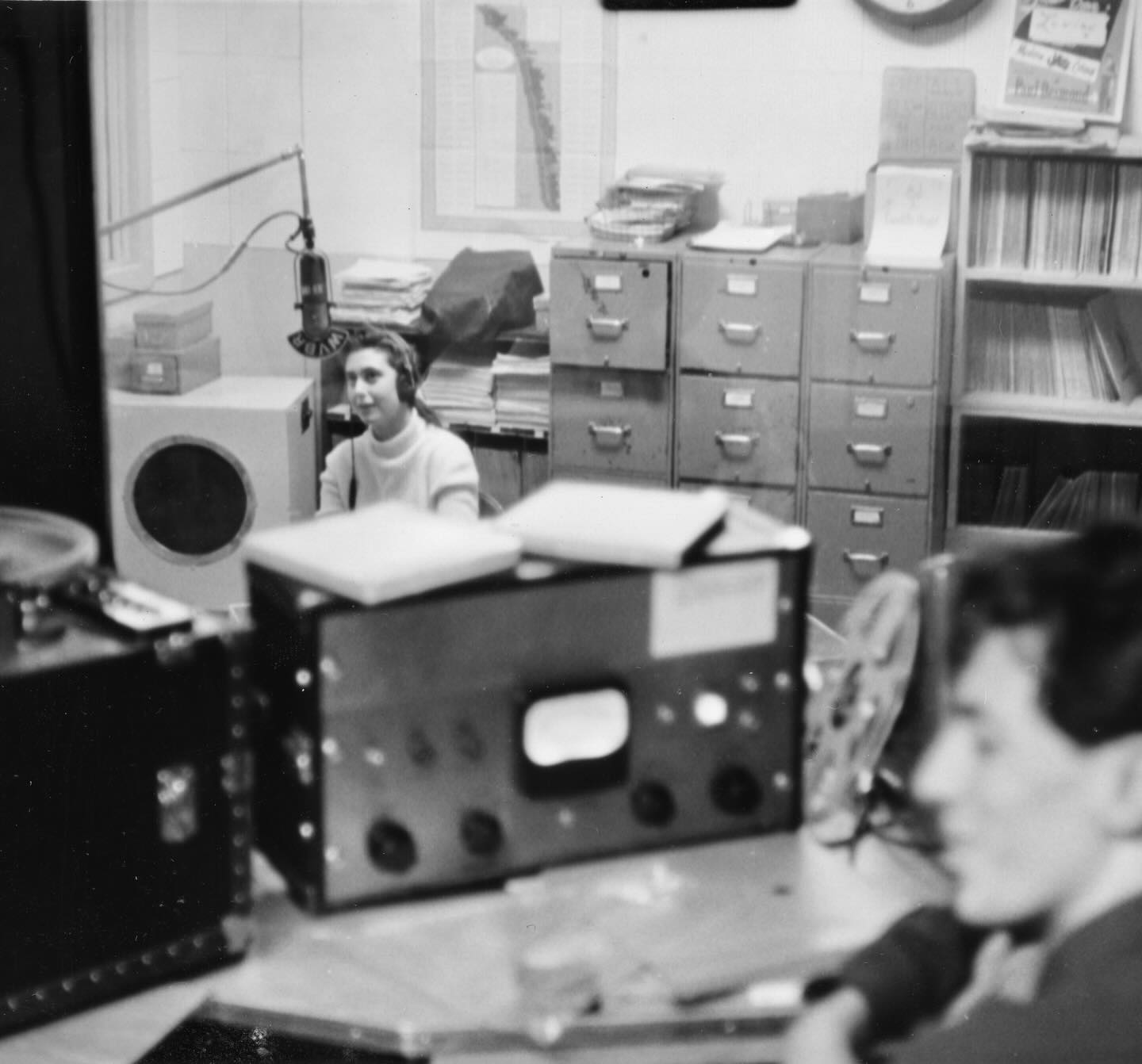
 I don’t recall how the idea came to me, but during my sophomore year I decided it would be interesting to have a radio show that featured folksongs. It took a bit of time and wading through permissions and red tape, but eventually I got the program. I hosted it for two years at Cornell on the university station, WVBR. It was after one of my programs that an engineer from the radio staff asked if I would like to make a recording. He was with the short-lived “Cornell Recording Society,” an informal group that worked with the station. Professor Thompson’s assistant before me, Dan Isaacson, had made a record with them, and since I was disappointed with the record I had cut before I arrived at Cornell, I quickly accepted the invitation.

And so I recorded the album Careless Love. We recorded it in the radio station studio, with my friends looking in through the heavy panes of glass from the control room. I was pleased with it. My classmate, Howard Mitchell, took the photos for the album cover… wonderful photos! Howie was in Engineering at Cornell, and he was a true friend and a fine photographer. He and a number of his cohorts were fellow folksingers from what was by then a significant following of students and faculty on campus. By popular demand I had begun leading group sings every Sunday evening in the basement of one of the women’s dorms.

 Those weekly sings were a great success. But these were the years of the “Red Scares,” the McCarthy years, and there were occasional interruptions. One Sunday evening during our sing, a large man in a trench coat, followed by other large men in trench coats, burst into the room, proclaiming, “We know what you are doing!” We watched in stunned silence while they continued … warning us to behave ourselves. Which we continued to do… just as we were doing before they entered. It was a non-event.

In general, my years at Cornell were good. The recording of Careless Love turned out well, and I regarded it as something akin to the diploma I received for surviving four years at the university. I was not locked out of Cornell during those McCarthy years. Our greatest “subversive act” was singing songs that were part of our heritage and which protested things that were not. Actually, we were a tame group; a few years behind us were Peter Yarrow and Richard Fariña.

Robert Heinlein’s book Strangers in a Strange Land came out in 1961, not too long after 1957 when we graduated. Even Heinlein knew that strangers are difficult to spot at times. We were not the subversives that HUAC might have thought folksingers were. We were good students, good people, and we certainly had the ability to think critically—wasn’t that what college was all about? We were singers of folksongs, out there in plain view, doing nothing wrong, living our lives and singing our songs—like the children in Russell Hoban's science-fiction novel Riddley Walker.

My official diploma was earned and served me well to continue my career as a folklorist. I had received a fine education there and finally knew who Bach was. Careless Love, my “ersatz” diploma that I took great pride in, never hit the charts or received much attention. But I was busy with graduate school, not minding its relative obscurity. However, it is still with us. And through the skill, patience and devotion to folksong of Ross Wylde, I offer it to you now, fresh off the old turntable with Ross’ remastering.

 May we survive these times as we did in the past.