We’re happy to share below the liner notes for Ellen’s compilation album All My Friends: A Queer Folk Songbook, which includes an essay by writer and archivist Anastasia Branas, as well as more information on the recording and stories behind the individual songs. (To listen to the album, please visit the Music & Performing page on this website, or Ellen’s Bandcamp page.) Please read on:
Liner notes
“All my friends fell out with me
Because I kept my love’s company
But let them say or do what they will
I love my love with a free goodwill”
—From "Free Goodwill", a traditional Appalachian song

Among the thirteen people arrested at the Stonewall Inn on June 28, 1969, was none other than the folk singer Dave Van Ronk. He had been at a bar two doors down, and wandered over after hearing the commotion from the raid. Although Van Ronk was not gay or involved any further than this with the Gay Rights Movement, many of the values of Van Ronk’s New York City folk-revival scene coincided with the New York City queer scene. As he put it, “What I saw was yet another example of police arrogance and corruption. As far I was concerned, anybody who’d stand against the cops was all right with me, and that’s why I stayed.” These two worlds both began to flourish in the 1950s and 1960s in Manhattan’s Greenwich Village, mere blocks or even doors away from each other, as we can see through Van Ronk. But why do we not think of these scenes as being interconnected? Why are they so separate in scholarship and media? Ellen Stekert’s new archival album All My Friends: A Queer Folk Songbook allows us to explore this intersection for the first time.

It has never particularly been a good time to be queer in the United States, but in some regards, perhaps the best time is always the present. LGBT+ people have existed throughout history—there is no question about that. Over and over again, in various iterations, our rights and our lives have been threatened and taken away, and yet through it all, our queerness remains unbroken. Amidst the newest threats to said rights, queerness is more canonized than ever before. Simultaneously, while the U.S. government, among other administrations, actively threatens and questions queer and trans lives, our culture is saturated with more openly queer and trans people than has historically been seen before.

How did queer communities of past eras form relationships, produce culture, and build their lives? And going forward, how can we honor the comfort and acceptance they carved out for us? We cannot fully grasp where we are now—or where we are headed—without fully understanding all that has come before us. As queerness emerges into popular culture, previously unsung and underappreciated queer artists and their art are beginning to come out of the archives. Entering this canon now is the one and only Ellen Stekert.

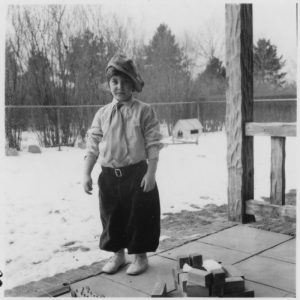
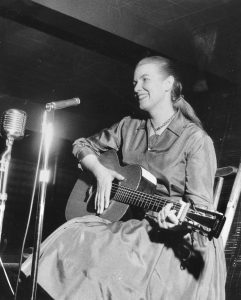
A folklorist by training, Ellen has dedicated her life to collecting, studying, teaching, and singing folk music. In her early adulthood in the 1950s and ‘60s, she was involved with the Greenwich Village folk revival, playing alongside legends such as Van Ronk, Bob Dylan, Jean Ritchie, Judy Collins, and many others. Besides her fieldwork and music work, Ellen was a Professor of English and American Studies at the University of Minnesota. She currently lives with her partner Beth in Minneapolis.

I first found out about Ellen while reading about the now cult-classic-status folk singer Connie Converse in the 2023 Howard Fishman biography. I was intrigued by Converse, as when I read about a strange and husbandless woman of the past, queer alarm bells went off. Converse is full of ambiguity. Her story is one that we will never fully understand. When Ellen Stekert was quoted as being a lesbian folk singer during the same era as Connie, I never imagined I would end up learning so much more. I figured if I couldn’t ask Converse, perhaps I could ask Ellen. What did it mean to be queer within the folk scene in midcentury America? How did that change the music, if at all?

I grew up thinking the ‘60s were about Bob Dylan as a douchey-yet-charming womanizer: beautiful women with long hair, wailing and guitars, and lots of weed. Maybe these downtown artist-types were more relaxed than their white-picket-fenced suburban peers. Maybe they approved of things like lesbianism and women in pants. But this is the easy romantic story 21st century media tells us. Putting everything into this larger, more historic context, one quickly realizes how incorrect this assumption is. These things may have been true, but blended into the beginnings of free love was the tail end of McCarthyism. Perhaps a small sect of people in our society were able to function carefree at this time, or at least with different cares, but the majority of people involved with this scene were likely faced with bigoted limitations.

Regardless, as previously mentioned, New York City in the ‘50s and ‘60s was a queer place, and not in a hidden sense. As queer bars began to flourish in downtown Manhattan, so did folk music venues. Just blocks away from each other were Julius’– the oldest gay bar in New York City– and the Gaslight– the coffeehouse frequented by beat and folkies alike; two different yet coexisting worlds of outcasts. Geographically and politically it seems impossible from a 21st century perspective that these communities never collided.

Ellen helped me understand the parallels between queers and the folkies of that period. They were both left-learning, yes, but the folk-revival scene was not as vocal in its exploration of gender and sexuality. They may have been “emotional" when it came to poetry and songwriting, but they were less open to “lifestyles” that fell outside of their heteronormative upbringings. Regardless, the Greenwich Village bohemian culture, in all its different subsects, attracted people on the fringes of society.

Ellen and I discussed what it means to be seen and to exist. Why do I care that there were queer people in this scene? Why do I want evidence so badly? What does it matter if I find it? What happens if I do? The quick answer is that queerness has not been recognized and praised until recently. The more and more we learn about queerness and the ways in which it has pervaded the past is always worth celebrating.

Folk songs are aural and musical records of what people think history was. They are vehicles for stories passed down from generation to generation, region to region, era to era. Yes, they live in acid-free archival boxes and museum basements, but they are also handed down through the sheer act of song and memory. These melodies and lyrics represent the values of the groups that originally created them and continue to perpetuate them. As Ellen put it, a folk song is most poignant when it is able to continue morphing with the values of said audience, and if not it can be forgotten. Traditional folk music is an ode to the mundane; to what people saw and how it made them feel. The reason so many of these songs have lasted so long is the universality and timelessness they are able to convey. They tell us what love was like then, and yet that feeling remains largely the same. The feelings of grief and anger in a murder ballad from 100 years ago may still strike a chord today. But within this ubiquity, it is natural to want to see oneself more specifically reflected in the archive. Although queerness may have not been accepted or discussed in the way that it is now in these songs, are there perhaps places it has been hidden this whole time?

After I read that Ellen was queer, I immediately looked up her music. At the time, she had one album from 1958 on Spotify, Songs of a New York Lumberjack. I later learned from talking to Ellen, that she had collected and learned these songs from Ezra “Fuzzy” Barhight, who was indeed a retired lumberjack. I was working in my undergrad’s archives and looking through Connie Converse’s few records. I remember doing a project involving the very repetitive task of erasing dates on old folders, and listened to Ellen’s record front to back over and over again, trying to understand it like a story. As strange as it may sound, I listened to the record with a “queer ear”.

Towards the end of the tracklist, Ellen sings "Lakes of Pontchartrain". In the record’s liner notes, she explains that the origins of this song are a mystery: “Various groups have adapted the song to their own occupation, including the cowboy and lumberjack.” It is ultimately a story of unrequited love. She sings,

"Well, she took me to her father's house, and treated me right well,
Her hair in golden ringlets down on her shoulders fell;
I tried for to win her beauty, I tried that all in vain,
So handsome was the Creole girl on the Lakes of Pontchartrain."

When I first heard this, I was in awe. I knew that of course it was not something Ellen had written, but regardless, it was the oldest song I had ever heard where a woman was singing about being attracted to another woman. At the time, I wondered whether or not this meant anything to her. Did calling a woman handsome mean to Ellen or her audience what it meant to me? Ellen told me, “It occurred to me that I didn’t mind singing from a man’s point of view on the Lumberjack record… and not just narratively but personally—they are without embarrassment or fear. I was aware of the traditional practice of letting the song sing itself and not take it on personally—and the traditional audience did the same—but for the record I did know that the audience, so scattered and so diverse, would do all sorts of things with it. But I didn’t mind doing the songs.”

In the same spirit of living an unabashedly queer life, Ellen is now releasing All My Friends. This album is a collection of songs recorded in the 1950s and ‘60s of both traditional and folk-revival folk songs. In both melody and lyrics, these songs are not different from what you have heard before—in fact, you may already know many of them. But, at the time of their initial recordings, Ellen was tentative about the pronouns and subject matter of the songs. To sing of her love for another woman, even under the safe guard of covering a song, meant the risk of being accused of being queer. Oftentimes, although not always, folk singers change the pronouns of the love interest in a song to correlate with the gender of the singer and who they are attracted to. For example, changing "Man of Constant Sorrow" to Joan Baez’s "Girl of Constant Sorrow". Or a more simple changing of she to he when a woman is singing a song that talks romantically of said she.

According to Ellen, in the ‘50s through the ‘70s, the singer was identified with the subject of the song they sang. Ellen was not just a woman unabashedly singing a love ballad for another woman in the 1950s, but a queer woman doing that. She felt fear and pressure of being associated with queerness and lesbianism, even if the public couldn’t see it. When singing traditionally, Ellen says, “the singer serves as the vehicle for the song.” Queerness can be worn as a costume by the singer—mistaken and not heavy-handed—but the beauty of All My Friends is the ownership Ellen has given back to both the song and the singer.

From what I understand, there was also an unspoken understanding of queerness among the few other queer people living between the folk and gay worlds. The folksinger Paul Clayton is the most prominent example of queerness in this vein, although he lived his life in the closet. His romantic life was private, and queerness is not overtly reflected in his music. There are too many factors to list of why he may have lived his life this way, but it seems likely that in terms of musical content, he shared Ellen’s fear of the consequences of being associated with gayness.

In instances where queerness seems to be absent, it can usually be found under the surface. We have learned how to create our own narratives and our own histories. If we are not given the respect, the space, or the option, we have to reinterpret the world in order to make it our own. As all queers know: we keep each other safe. This album is a moment to celebrate that safety. All My Friends does not ask us to rewrite history entirely, but rather allows us to have a moment of utopia in a history that has only recently included us. This is the essence and power of the folk song.

These songs have existed for a long time—long before this release and long before when Ellen heard them for the first time. They were likely not written under the guise of queerness, but they have been interpreted and reinterpreted more times than anyone can keep track of, so what’s one more? Music, and folk music especially, gives us an outlet to understand ourselves and history. Hundred-year-old songs that describe feelings of longing and love known by everyone, gay or straight, young or old. She has given these songs another life, and allowed us to experience these stories in a previously hidden capacity. Ellen, and any queer listeners alike, deserve a guiltless queer folk album.

In her version of Pete Seeger’s "Old Devil Time", Ellen sings, “No storm or fire can ever beat us down / No wind that blows but carries us further on / And you who fear, oh lovers, gather 'round.” Although this song is not queer in its pronouns, it instead acts as recognition of the universalities of love and being human. “We need that on this,” Ellen said, “Cultural understanding makes us wiser and heals us. A song, more specifically a folk song, allows us to speak, listen, and learn beyond our cultural limits. This is a listening opportunity to understand and appreciate the intricacies of being human—queerness and not—and the ways in which the archive can always provide insight into that.”
Track listing and additional information
1. “I’ll Give You Any Mountain” (3:39)
2. “Golden Apples Of The Sun” (3:22) (more info)
3. “Mary Ann” (3:20)
4. “Went To The Sea” (2:17) (more info)
5. “The Brazos River (feat. Milt Okun)” (2:36)
6. “Starfish” (2:46)
7. “Free Goodwill” (3:00) (more info)
8. “Four Strong Winds” (2:57) (more info)
9. “Scarborough Fair” (3:41) (more info)
10. “Puttin’ On The Style” (2:27) (more info)
11. “Farewell My Dearest Nancy” (2:35)
12. “Old Devil Time” (3:31) (more info)
13. “Banks Of The Ohio” (3:17)
Credits
Released August 17, 2026
Guitar, Vocals: Ellen Stekert
Producers: Ross Wylde, Anastasia Branas
Liner Notes: Anastasia Branas
Production Assistant: Bates Detwiler
Editorial & Publicity Manager: Christopher Bahn