Tag Archives: Pete Seeger

Folk legend and folklorist Ellen Stekert announces unreleased archival album: “All My Friends: A Queer Folk Songbook”

Ellen Stekert, 91-year-old folksinger and folklorist, releases a landmark collection of unreleased 1950s and ’60s recordings, celebrating the intersection of folk music and queer history.

Academic and Greenwich Village folk veteran Ellen Stekert announces the release of All My Friends: A Queer Folk Songbook. At 91 years old, Stekert is opening her archives to share a collection of previously unreleased recordings from the 1950s and 1960s, offering a rare, intimate look at the historical intersections of the American folk revival and LGBTQ+ identity. The album can be heard (and purchased) on Ellen’s Bandcamp page.

This collection of songs is a collaboration between Ellen, her producer Ross Wylde, and Anastasia Branas, an archivist and queer history enthusiast. The album is meant to re-contextualize traditional and revivalist songs through a distinctly queer lens. During mid-century America, singing love ballads directed at the same sex—even within the traditional folk framework—carried social and personal risks. All My Friends reclaims those performances, giving both singer and song complete ownership.

“Ellen and I met by chance online,” says producer Ross Wylde. “As a young queer folksinger, I was surprised to have so much in common with Ellen, who is a legendary folkie from the original Greenwich Village scene, but also a queer artist who sang the same songs 70 years apart, and related to them on similar levels. I think queer culture has had a unique influence on folk music over the last century, and vice versa. Folk music’s power lies in its unique emphasis on lyricism, and its natural ability for those lyrics to be constantly reinterpreted; folk music makes you feel like you belong, whoever you are.”

In the album’s liner notes, archivist Anastasia Branas highlights how the bohemian world of Greenwich Village housed both budding movements, even as scholarship historically kept them separate.

“Among the thirteen people arrested at the Stonewall Inn on June 28, 1969, was none other than the folk singer Dave Van Ronk,” writes Branas. “These two worlds both began to flourish in the 1950s and 1960s in Manhattan’s Greenwich Village, mere blocks or even doors away from each other… Ellen Stekert’s new archival album, All My Friends: A Queer Folk Songbook, allows us to explore this intersection for the first time.”

Reflecting on the nature of folk music and its power to bridge gaps across eras, Stekert adds: “Cultural understanding makes us wiser and heals us. A song, more specifically a folk song, allows us to speak, listen, and learn beyond our cultural limits. This is a listening opportunity to understand and appreciate the intricacies of being human—queerness and not—and the ways in which the archive can always provide insight into that.”
To read Anastasia Branas’ liner notes and additional archival details about the songs on All My Friends: A Queer Songbook, please visit this page.

Liner notes and other information for “All My Friends: A Queer Folk Songbook”

We’re happy to share below the liner notes for Ellen’s compilation album All My Friends: A Queer Folk Songbook, which includes an essay by writer and archivist Anastasia Branas, as well as more information on the recording and stories behind the individual songs. (To listen to the album, please visit the Music & Performing page on this website, or Ellen’s Bandcamp page.) Please read on:

Liner notes

“All my friends fell out with me
Because I kept my love’s company
But let them say or do what they will
I love my love with a free goodwill”
—From "Free Goodwill", a traditional Appalachian song

Among the thirteen people arrested at the Stonewall Inn on June 28, 1969, was none other than the folk singer Dave Van Ronk. He had been at a bar two doors down, and wandered over after hearing the commotion from the raid. Although Van Ronk was not gay or involved any further than this with the Gay Rights Movement, many of the values of Van Ronk’s New York City folk-revival scene coincided with the New York City queer scene. As he put it, “What I saw was yet another example of police arrogance and corruption. As far I was concerned, anybody who’d stand against the cops was all right with me, and that’s why I stayed.” These two worlds both began to flourish in the 1950s and 1960s in Manhattan’s Greenwich Village, mere blocks or even doors away from each other, as we can see through Van Ronk. But why do we not think of these scenes as being interconnected? Why are they so separate in scholarship and media? Ellen Stekert’s new archival album All My Friends: A Queer Folk Songbook allows us to explore this intersection for the first time.

It has never particularly been a good time to be queer in the United States, but in some regards, perhaps the best time is always the present. LGBT+ people have existed throughout history—there is no question about that. Over and over again, in various iterations, our rights and our lives have been threatened and taken away, and yet through it all, our queerness remains unbroken. Amidst the newest threats to said rights, queerness is more canonized than ever before. Simultaneously, while the U.S. government, among other administrations, actively threatens and questions queer and trans lives, our culture is saturated with more openly queer and trans people than has historically been seen before.

How did queer communities of past eras form relationships, produce culture, and build their lives? And going forward, how can we honor the comfort and acceptance they carved out for us? We cannot fully grasp where we are now—or where we are headed—without fully understanding all that has come before us. As queerness emerges into popular culture, previously unsung and underappreciated queer artists and their art are beginning to come out of the archives. Entering this canon now is the one and only Ellen Stekert.

A folklorist by training, Ellen has dedicated her life to collecting, studying, teaching, and singing folk music. In her early adulthood in the 1950s and ‘60s, she was involved with the Greenwich Village folk revival, playing alongside legends such as Van Ronk, Bob Dylan, Jean Ritchie, Judy Collins, and many others. Besides her fieldwork and music work, Ellen was a Professor of English and American Studies at the University of Minnesota. She currently lives with her partner Beth in Minneapolis.

I first found out about Ellen while reading about the now cult-classic-status folk singer Connie Converse in the 2023 Howard Fishman biography. I was intrigued by Converse, as when I read about a strange and husbandless woman of the past, queer alarm bells went off. Converse is full of ambiguity. Her story is one that we will never fully understand. When Ellen Stekert was quoted as being a lesbian folk singer during the same era as Connie, I never imagined I would end up learning so much more. I figured if I couldn’t ask Converse, perhaps I could ask Ellen. What did it mean to be queer within the folk scene in midcentury America? How did that change the music, if at all?

I grew up thinking the ‘60s were about Bob Dylan as a douchey-yet-charming womanizer: beautiful women with long hair, wailing and guitars, and lots of weed. Maybe these downtown artist-types were more relaxed than their white-picket-fenced suburban peers. Maybe they approved of things like lesbianism and women in pants. But this is the easy romantic story 21st century media tells us. Putting everything into this larger, more historic context, one quickly realizes how incorrect this assumption is. These things may have been true, but blended into the beginnings of free love was the tail end of McCarthyism. Perhaps a small sect of people in our society were able to function carefree at this time, or at least with different cares, but the majority of people involved with this scene were likely faced with bigoted limitations.

Regardless, as previously mentioned, New York City in the ‘50s and ‘60s was a queer place, and not in a hidden sense. As queer bars began to flourish in downtown Manhattan, so did folk music venues. Just blocks away from each other were Julius’– the oldest gay bar in New York City– and the Gaslight– the coffeehouse frequented by beat and folkies alike; two different yet coexisting worlds of outcasts. Geographically and politically it seems impossible from a 21st century perspective that these communities never collided.

Ellen helped me understand the parallels between queers and the folkies of that period. They were both left-learning, yes, but the folk-revival scene was not as vocal in its exploration of gender and sexuality. They may have been “emotional" when it came to poetry and songwriting, but they were less open to “lifestyles” that fell outside of their heteronormative upbringings. Regardless, the Greenwich Village bohemian culture, in all its different subsects, attracted people on the fringes of society.

Ellen and I discussed what it means to be seen and to exist. Why do I care that there were queer people in this scene? Why do I want evidence so badly? What does it matter if I find it? What happens if I do? The quick answer is that queerness has not been recognized and praised until recently. The more and more we learn about queerness and the ways in which it has pervaded the past is always worth celebrating.

Folk songs are aural and musical records of what people think history was. They are vehicles for stories passed down from generation to generation, region to region, era to era. Yes, they live in acid-free archival boxes and museum basements, but they are also handed down through the sheer act of song and memory. These melodies and lyrics represent the values of the groups that originally created them and continue to perpetuate them. As Ellen put it, a folk song is most poignant when it is able to continue morphing with the values of said audience, and if not it can be forgotten. Traditional folk music is an ode to the mundane; to what people saw and how it made them feel. The reason so many of these songs have lasted so long is the universality and timelessness they are able to convey. They tell us what love was like then, and yet that feeling remains largely the same. The feelings of grief and anger in a murder ballad from 100 years ago may still strike a chord today. But within this ubiquity, it is natural to want to see oneself more specifically reflected in the archive. Although queerness may have not been accepted or discussed in the way that it is now in these songs, are there perhaps places it has been hidden this whole time?

After I read that Ellen was queer, I immediately looked up her music. At the time, she had one album from 1958 on Spotify, Songs of a New York Lumberjack. I later learned from talking to Ellen, that she had collected and learned these songs from Ezra “Fuzzy” Barhight, who was indeed a retired lumberjack. I was working in my undergrad’s archives and looking through Connie Converse’s few records. I remember doing a project involving the very repetitive task of erasing dates on old folders, and listened to Ellen’s record front to back over and over again, trying to understand it like a story. As strange as it may sound, I listened to the record with a “queer ear”.

Towards the end of the tracklist, Ellen sings "Lakes of Pontchartrain". In the record’s liner notes, she explains that the origins of this song are a mystery: “Various groups have adapted the song to their own occupation, including the cowboy and lumberjack.” It is ultimately a story of unrequited love. She sings,

"Well, she took me to her father's house, and treated me right well,
Her hair in golden ringlets down on her shoulders fell;
I tried for to win her beauty, I tried that all in vain,
So handsome was the Creole girl on the Lakes of Pontchartrain."

When I first heard this, I was in awe. I knew that of course it was not something Ellen had written, but regardless, it was the oldest song I had ever heard where a woman was singing about being attracted to another woman. At the time, I wondered whether or not this meant anything to her. Did calling a woman handsome mean to Ellen or her audience what it meant to me? Ellen told me, “It occurred to me that I didn’t mind singing from a man’s point of view on the Lumberjack record… and not just narratively but personally—they are without embarrassment or fear. I was aware of the traditional practice of letting the song sing itself and not take it on personally—and the traditional audience did the same—but for the record I did know that the audience, so scattered and so diverse, would do all sorts of things with it. But I didn’t mind doing the songs.”

In the same spirit of living an unabashedly queer life, Ellen is now releasing All My Friends. This album is a collection of songs recorded in the 1950s and ‘60s of both traditional and folk-revival folk songs. In both melody and lyrics, these songs are not different from what you have heard before—in fact, you may already know many of them. But, at the time of their initial recordings, Ellen was tentative about the pronouns and subject matter of the songs. To sing of her love for another woman, even under the safe guard of covering a song, meant the risk of being accused of being queer. Oftentimes, although not always, folk singers change the pronouns of the love interest in a song to correlate with the gender of the singer and who they are attracted to. For example, changing "Man of Constant Sorrow" to Joan Baez’s "Girl of Constant Sorrow". Or a more simple changing of she to he when a woman is singing a song that talks romantically of said she.

According to Ellen, in the ‘50s through the ‘70s, the singer was identified with the subject of the song they sang. Ellen was not just a woman unabashedly singing a love ballad for another woman in the 1950s, but a queer woman doing that. She felt fear and pressure of being associated with queerness and lesbianism, even if the public couldn’t see it. When singing traditionally, Ellen says, “the singer serves as the vehicle for the song.” Queerness can be worn as a costume by the singer—mistaken and not heavy-handed—but the beauty of All My Friends is the ownership Ellen has given back to both the song and the singer.

From what I understand, there was also an unspoken understanding of queerness among the few other queer people living between the folk and gay worlds. The folksinger Paul Clayton is the most prominent example of queerness in this vein, although he lived his life in the closet. His romantic life was private, and queerness is not overtly reflected in his music. There are too many factors to list of why he may have lived his life this way, but it seems likely that in terms of musical content, he shared Ellen’s fear of the consequences of being associated with gayness.

In instances where queerness seems to be absent, it can usually be found under the surface. We have learned how to create our own narratives and our own histories. If we are not given the respect, the space, or the option, we have to reinterpret the world in order to make it our own. As all queers know: we keep each other safe. This album is a moment to celebrate that safety. All My Friends does not ask us to rewrite history entirely, but rather allows us to have a moment of utopia in a history that has only recently included us. This is the essence and power of the folk song.

These songs have existed for a long time—long before this release and long before when Ellen heard them for the first time. They were likely not written under the guise of queerness, but they have been interpreted and reinterpreted more times than anyone can keep track of, so what’s one more? Music, and folk music especially, gives us an outlet to understand ourselves and history. Hundred-year-old songs that describe feelings of longing and love known by everyone, gay or straight, young or old. She has given these songs another life, and allowed us to experience these stories in a previously hidden capacity. Ellen, and any queer listeners alike, deserve a guiltless queer folk album.

In her version of Pete Seeger’s "Old Devil Time", Ellen sings, “No storm or fire can ever beat us down / No wind that blows but carries us further on / And you who fear, oh lovers, gather 'round.” Although this song is not queer in its pronouns, it instead acts as recognition of the universalities of love and being human. “We need that on this,” Ellen said, “Cultural understanding makes us wiser and heals us. A song, more specifically a folk song, allows us to speak, listen, and learn beyond our cultural limits. This is a listening opportunity to understand and appreciate the intricacies of being human—queerness and not—and the ways in which the archive can always provide insight into that.” 

Track listing and additional information

1. “I’ll Give You Any Mountain” (3:39)
2. “Golden Apples Of The Sun” (3:22) (more info)
3. “Mary Ann” (3:20)
4. “Went To The Sea” (2:17) (more info)
5. “The Brazos River (feat. Milt Okun)” (2:36)
6. “Starfish” (2:46)
7. “Free Goodwill” (3:00) (more info)
8. “Four Strong Winds” (2:57) (more info)
9. “Scarborough Fair” (3:41) (more info)
10. “Puttin’ On The Style” (2:27) (more info)
11. “Farewell My Dearest Nancy” (2:35)
12. “Old Devil Time” (3:31) (more info)
13. “Banks Of The Ohio” (3:17)

Credits

Released August 17, 2026

Guitar, Vocals: Ellen Stekert
Producers: Ross Wylde, Anastasia Branas
Liner Notes: Anastasia Branas
Production Assistant: Bates Detwiler
Editorial & Publicity Manager: Christopher Bahn

Folk Legend Ellen Stekert unveils archival single “Old Devil Time” and rare, unseen Pete Seeger photographs

A poignant 1990s home recording honors a lifelong friendship and the enduring legacy of an American folk icon.

Distinguished musician, scholar, and folklorist Ellen Stekert has announced the release of her new single, “Old Devil Time.” A deeply personal rendition of Pete Seeger’s classic song, the track was recorded at Stekert’s home in the early 1990s. Coinciding with the single’s release, Stekert is opening her personal archives to share three rare photographs she took of Seeger circa 1983. These historic images are now available to the public via her online photo gallery at https://ellenstekert.darkroom.com/.

Stekert and Seeger shared a friendship spanning decades, having first met at New York City “hoots”—informal musical jam sessions—in the late 1940s. Seeger closely followed Stekert’s education and training in folklore, even mentioning her in his Sing Out column in 1956 when she drove across the country alone in a VW bug, singing and collecting traditional material. The two later shared the stage live in 1957 at Cornell University, Stekert’s alma mater.

Stekert initially learned “Old Devil Time” from a woman named Elli Winters while first teaching at Wayne State University in Detroit, only later discovering its origins.

“I later was told that Pete Seeger had written it, and that he had composed it at the last minute when he was asked to write a song for the film Tell Me You Still Love Me, Junie Moon,” Stekert reflects. “It has always been one of my favorites; it shows Pete’s remarkable musicality and his inclusive sensitivity.”

The release serves as a warm tribute to a man Stekert remembers as “indestructible” and “positive almost to a fault.” Despite being blacklisted by the U.S. government during the McCarthy era, Seeger’s massive influence on American culture never waned. “He was one of the most generous and gentle, yet compelling ambassadors still left of the few remaining souls who bridged the gap between World War II, the first part of the Folksong Revival, and the Second,” Stekert recalls.

With the single, Stekert also shares a legendary piece of folklore passed down to her by folk matriarch Jean Ritchie regarding Bob Dylan’s infamous electrified performance at the 1965 Newport Folk Festival. As Ritchie told Stekert, when Dylan unexpectedly switched to a high-volume electric set, a frustrated Seeger—who had long advised Dylan against going electric—was seen scurrying around backstage looking at the ground. When Ritchie asked what he was doing, Seeger replied to her, “I’m looking for a stone to throw through that blasted machine!”

“Old Devil Time” is available now on all major streaming and digital platforms. To view the exclusive photographs of Pete Seeger, visit https://ellenstekert.darkroom.com/. To read Ellen’s full write-up about this song and her friendship with Pete Seeger, click here to read the blogpost or visit her Bandcamp page.

Ellen on Pete Seeger and “Old Devil Time”

In her own words, Ellen tells the story of her friendship with Pete Seeger and the story behind her cover of his song “Old Devil Time.” The song is available now on all major streaming and digital platforms and can be purchased on her Bandcamp page. To view her exclusive photographs of Pete Seeger, visit https://ellenstekert.darkroom.com/.

I learned this song from a woman named Elli Winters when I was first teaching at Wayne State University in Detroit. I later was told that Pete Seeger had written it, and that he had composed it at the last minute when he was asked to write a song for the film Tell Me You Still Love Me, Junie Moon. It has always been one of my favorites; it shows Pete’s remarkable musicality and his inclusive sensitivity.

One day when I was working on an arrangement of the song "Come All Ye Fair and Tender Maidens", also known as "The Little Sparrow", I was struck by how similar the melody was to "Old Devil Time." It seemed to me that Pete might have had the traditional song in mind when he composed "Old Devil Time." I never did ask him about it, and I suppose it really does not matter, but by not asking, I missed an opportunity to see a bit into the mind of one of the most influential musicians of our time.

I do miss Pete. He seemed indestructible. He was always encouraging to other performers as well as folksong enthusiasts. He was positive almost to a fault. I remember how surprised I was at his handshake — you expected it to be firm and steady, after all he was a banjo player, but it was surprisingly gentle, almost limp.

Pete had few obvious aggressive traits. He was one of the most generous and gentle, yet compelling ambassadors still left of the few remaining souls who bridged the gap between World War II the first part of the Folksong Revival and the Second (the 1930s though the 1980s). Even though he was blacklisted by the U.S. government during the McCarthy era, it seemed to not decrease his influence on American popular culture.

Pete and I were long-time acquaintances, good enough to call each other friends. We had met at New York City "hoots"—informal musical jam sessions—in the late 1940s, and he followed my education and training in folklore, even mentioning me in his Sing Out column when I drove across country alone in my basic VW in 1956, singing my way and collecting/recording traditional material. When I had become a teaching professor, he often let me know when he would be in my vicinity and dropped in for a visit. One photo, which has been released to my online gallery (ellenstekert.darkroom.com), was taken during such a visit to Minneapolis around 1983.

Those of us who were around folksinging circles during the Revival have our Pete Seeger stories, and some of those stories also include others who were moving forces in the movement. My favorite story was told to me by Jean Ritchie, and I find it an endearing one since it is about a major event in the history of the folksong movement in the U.S. Here is how Jean told it to me:

Jean and Pete were backstage monitoring the performers onto and off the stage at the Newport Festival in 1965. All seemed to be going well when Bob Dylan took the stage in front of the thousands of excited fans present. According to Jean, Bob sang a number of acoustic songs and then, in a surprise move, switched to a high-volume set of electrified pieces with his band. The crowd went wild (both pro and con). Pete had long advised Bob not to go electric, yet here he was, defying Pete’s advice, not having forewarned anyone on the Newport Board of Directors (including Jean). That sent Pete (formerly a gentle supporter of Dylan), scurrying around, looking at the ground. Jean (who was a studied avoider of controversy) after watching him for several minutes, asked him what he was doing, to which he replied, "I’m looking for a stone to throw through that blasted machine!"

That was Jean’s story, but the idea of Pete becoming so angry as to want to throw a rock through Dylan’s amplifier, and Jean, who had avoided controversy at all costs in her career as a gentle Southern Mountain lady, both comforting one of the pivotal revolts of the Folksong Revival, is enough to be a memorable event.

Both Jean and Pete were being part of an event that was an historic and violent disruption and rebellion within the industry and social movement that had given each their celebrity status. Jean, who put her grandfather’s name as a pseudonym on her “protest songs” about the Harlan coal mining, and Pete, who had faced the U.S. congress’ House Un-American Activities Committee, had finally met their Waterloo in a bloodless coup that was inevitable.

The previous story about a story is an analysis of a story told by another person who is implicated but not the focus of the initial story but who actually factors in it and into yet another story... And that is the plight of the professional intellectual—and at times it is enlightening, but only at times. Nonetheless, it is through stories that we learn. Beware of story-tellers and remember to be "critical" in the best way; that is, think on what you hear.

Folklorist and singer Ellen Stekert unveils rare, behind-the-scenes photographs from the 1964 Newport Folk Festival

Ellen Stekert, distinguished folksinger, folklorist, and Professor Emerita, has announced the first public release of her private photographic archive. Now available for purchase, the debut collection features evocative, candid prints from the historic 1964 Newport Folk Festival, captured from Stekert’s unique vantage point as a backstage insider.

Prints are available now at: https://ellenstekert.darkroom.com/collections/1964-newport-folk-festival.

While many remember 1964 as the year before Bob Dylan “went electric,” Stekert experienced the festival as a companion and documentarian for legendary Kentucky singer Sarah Ogan Gunning. Armed with a Leica M2 and backstage access, Stekert captured intimate moments of folk royalty that have remained unseen for over sixty years.

The collection includes striking, unposed portraits of:

  • Bob Dylan: Caught in quiet moments backstage and at a topical song workshop.
  • Mississippi John Hurt & Elizabeth Cotten: A joyful candid moment that mirrors a famous shot by photojournalist Dave Gahr.
  • Doc Watson: A rare, atmospheric interior shot of the guitar legend resting with his mother.
  • Sarah Ogan Gunning: Powerful images of the “Southern Mountain Oracle” during her first-ever airplane trip and festival performance.
  • And many other icons including Pete Seeger, Malvina Reynolds, Peter Yarrow, Hedy West, and Theo Bikel.

“I had no theme in mind but to capture the Festival Sarah and I saw,” says Stekert. “The camera served as a record and a check on my impressions. I am honored that these amateur shots, born out of friendship and fieldwork, can now be shared with those who love this music and its history.”

This release marks the beginning of a larger archival project. In the coming months, Stekert will release further photographs documenting her multi-decade career at the heart of the American folk revival.

Ellen’s photography of the 1964 Newport Folk Festival out now!

Hi folks,

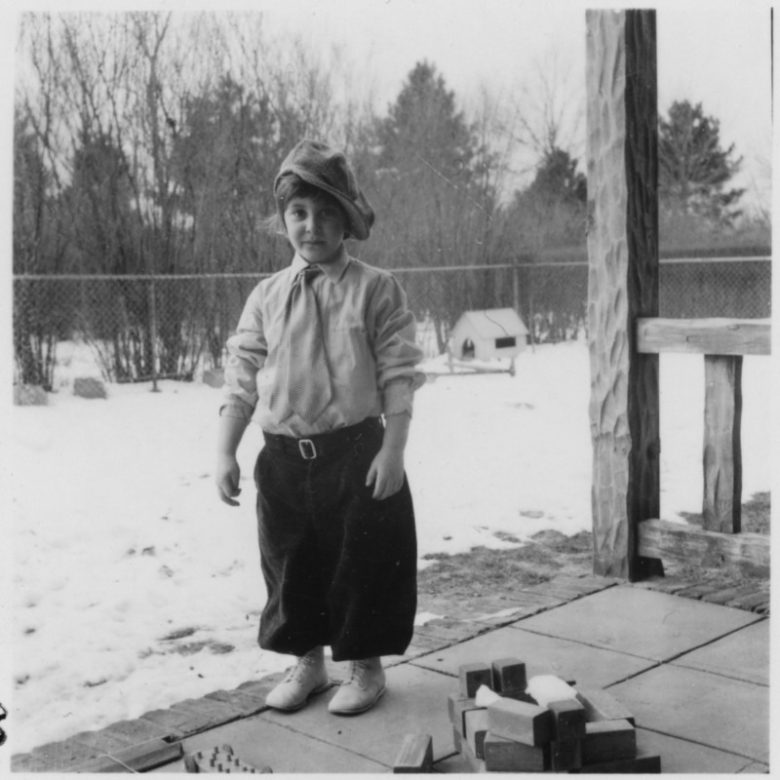
Ellen’s personal archives include hundreds of photographs of interest to fans of folk music and folklore. We are just starting to digitize, clean up, and organize this treasure trove of images, which includes material from Ellen’s folksong collecting trips, her childhood in 1940s and 1950s New York, and Ellen’s concerts and other public appearances. We will be posting many of these here on ellenstekert.com, and plan to offer some of the best of these for sale as prints and posters in the near future. (More details on that very soon!) 

We thought we’d start with images taken at the historic Newport Folk Festival in 1964. Most of these have never been publicly released before now. These photos include intimate and informal behind-the-scenes images of Bob Dylan, Pete Seeger, Peter Yarrow, Malvina Reynolds, Mississippi John Hurt, Doc Watson, and many more. Check it out on the Photography page!